Blog
The Definitive 2026 Deck Building Cost Guide: Prices, Permits, and Alaska Labor Trends
March 9, 2026
You deserve a real budget—not a Lower 48 calculator, a ghosting contractor, and a square-foot rate that explodes after site visit. Here is how 2026 pricing actually works for Anchorage and Alaska.
Getting a straight answer on what a new deck costs here should not feel impossible. You get no-shows, one-line “estimates,” and material prices that move before you sign—so it is no wonder homeowners give up before they ever get a written scope.
What this guide gives you: a practical way to budget for 2026, how to read Anchorage permit and site realities, and what to challenge when someone quotes you off a spreadsheet instead of your lot.
Chapter 1: The “Price Per Square Foot” Trap
Most homeowners spend months dealing with unresponsive contractors.
They get hit with “No shows on bids,” generic “I’ll get back with you” comments, or excuses that a company is suddenly booked up.
When they finally do get a quote, it’s often a flat “price per square foot.”
But here is the truth:
A flat square-foot rate is usually a trap. It almost always leads to hidden fees when complex site conditions are discovered.
The true cost of a deck depends heavily on elevation, soil conditions, custom features, and local Anchorage regulations.
If a contractor gives you a quote without looking at your property’s specific layout, run the other way.
Chapter 2: The Foundation (Why Standard Concrete Fails in Alaska)
The most critical part of your deck isn’t what you walk on. It’s what holds it up.
In Alaska, frost heave easily destroys standard concrete footings.
It gets better:
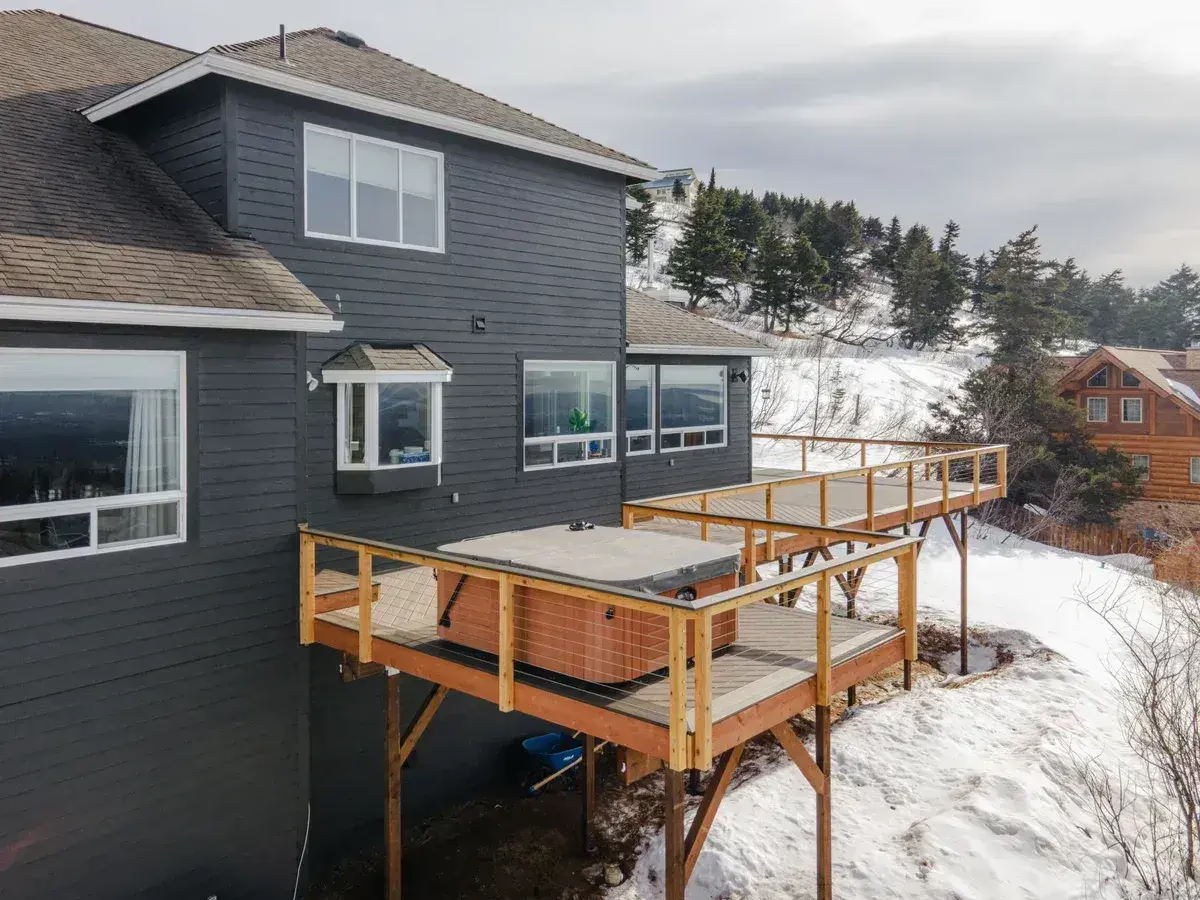
To prevent your deck from shifting, we utilize two distinct foundation methods that guarantee stability:
Driven Steel Piles: These are hammered 20 to 60 feet deep into the ground. We have installed over 5,000 of these piles, and only one has ever failed—during the massive 2018 earthquake. We fixed it completely free of charge.
Helical Piles (Techno Metal Post): These engineered posts are screwed 7 to 20 feet into the ground. The installation machine is so compact it can fit through a standard backyard gate or be flown to a remote cabin.
Both options are engineered specifically for Alaskan soil and carry heavy warranties against movement.
Chapter 3: Decking Materials Breakdown (Trex vs. TimberTech vs. Wood)
Choosing the right decking material dictates both your upfront budget and your weekend maintenance for the next two decades.
We specialize in building quality decks designed to last 30 to 50 years.
Here is how the top materials compare:
Pressure-Treated Wood & Cedar: Offers a classic look and a lower upfront cost, but requires high maintenance (annual staining) and risks warping in harsh winters.
Trex Composite: The gold standard in Alaska. It carries a higher upfront cost but requires almost zero maintenance.
TimberTech: An ultra-premium option. TimberTech features wider, thicker boards and superior hidden fasteners, though it hasn’t saturated the Alaska market quite like Trex.
You might be wondering:
What happens if there is a supply chain shortage?
We store thousands of square feet of decking and custom railing systems right here in our 2,000-square-foot Anchorage warehouse. This ensures your project won’t stall out while waiting on backordered materials.
Chapter 4: Demystifying Anchorage Permits
Navigating the complexities of permitting, tight utility corridors, and deep pilings requires immense local expertise.
If your new deck is 30 inches or higher off the ground, the Municipality of Anchorage requires a permit.
Now:
Trying to pull this permit yourself is a massive headache.
You have to deal with engineers, zoning laws, and ensuring the deck doesn’t cross utility easements or interfere with your neighbor’s property lines.
We have mastered this exact process. If you work with us, all we need from you is an “As-Built” property survey. We handle the engineering approvals, zoning checks, and the actual permitting process to ensure your deck is 100% legal.
Chapter 5: Structural Integrity and The “Masterpiece” Finish
A deck is only as strong as its weakest screw.
We refuse to use standard hardware store fasteners. Every deck we build utilizes hot-dip galvanized Simpson Strong-Tie hangers. These are engineered to endure the elements and withstand severe earthquakes without rusting.
But structure is only half the battle.
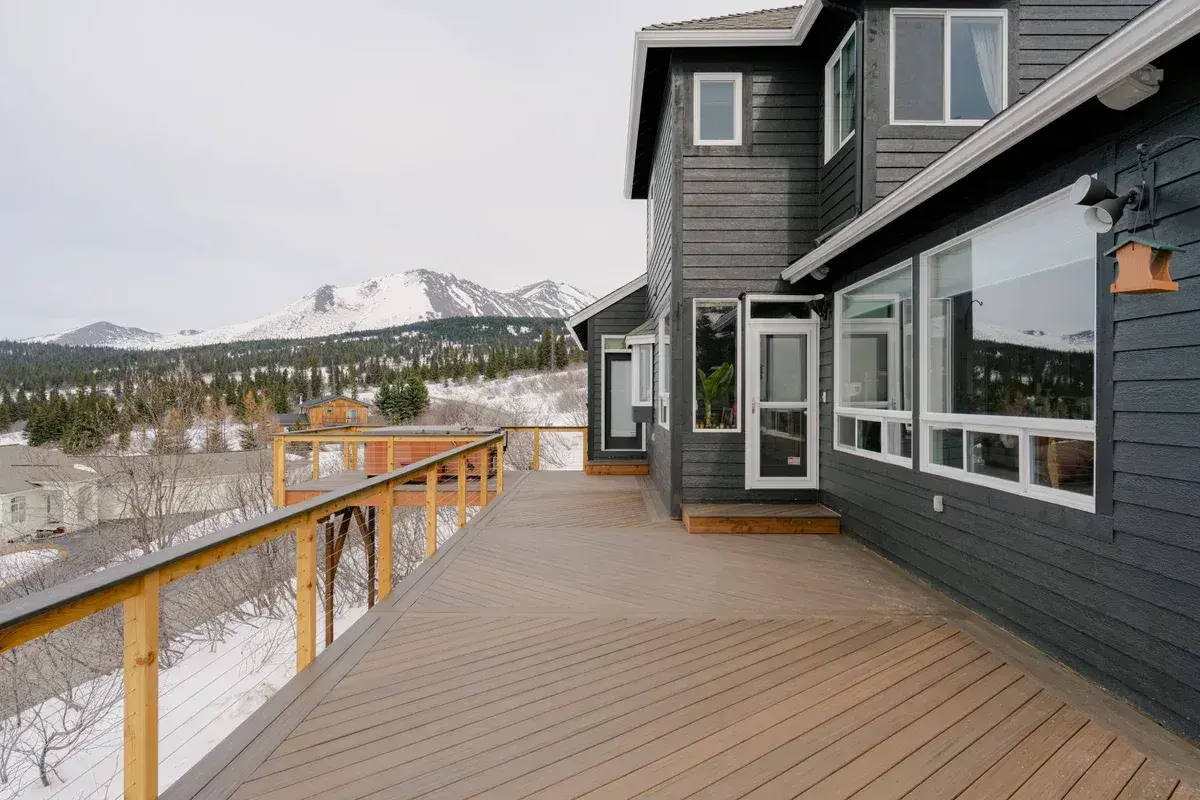
A true specialty contractor elevates the design. We utilize advanced installation techniques, like the “picture frame method,” to hide ugly cut ends and turn a standard deck into a masterpiece.
None of our decks have visible seams where two boards come together.
We can even integrate custom RailFX aluminum railing and hidden LED lighting that you can control directly from your smartphone.
Chapter 6: How to Vet a Deck Contractor
A deck is a major financial investment.
There are projects you can hire a handyman for, or buy a case of beer for your cousin to build on the weekend.
A custom 30-to-50-year deck is not one of them.
When vetting a contractor, demand a comprehensive proposal that leaves absolutely no room for guesswork.
A trustworthy professional will provide:
A detailed explanation of construction steps.
A transparent breakdown of fees.
Exact lumber sizes and support requirements.
We have built nearly 1,000 decks over the last 15 years, including 92 high-end custom builds just last year. We lay our heads on our pillows at night knowing we build with absolute integrity.
Ready to start your project?
Get a free quote